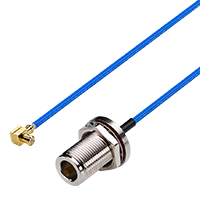
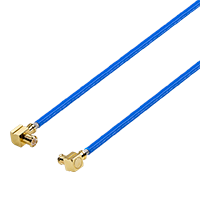
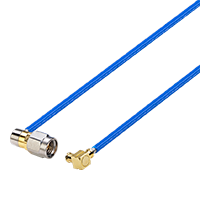
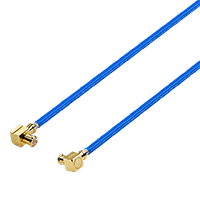
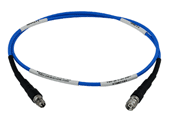
Mini-Circuits RF Cable Assemblies from DC to 110 GHz with Local Engineering Support in Israel
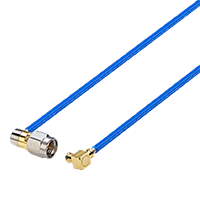
MCDI offers a broad selection of Mini-Circuits RF, microwave and millimeter-wave coaxial cable assemblies for system interconnection, RF test and measurement, laboratory use, production test and high-frequency applications.
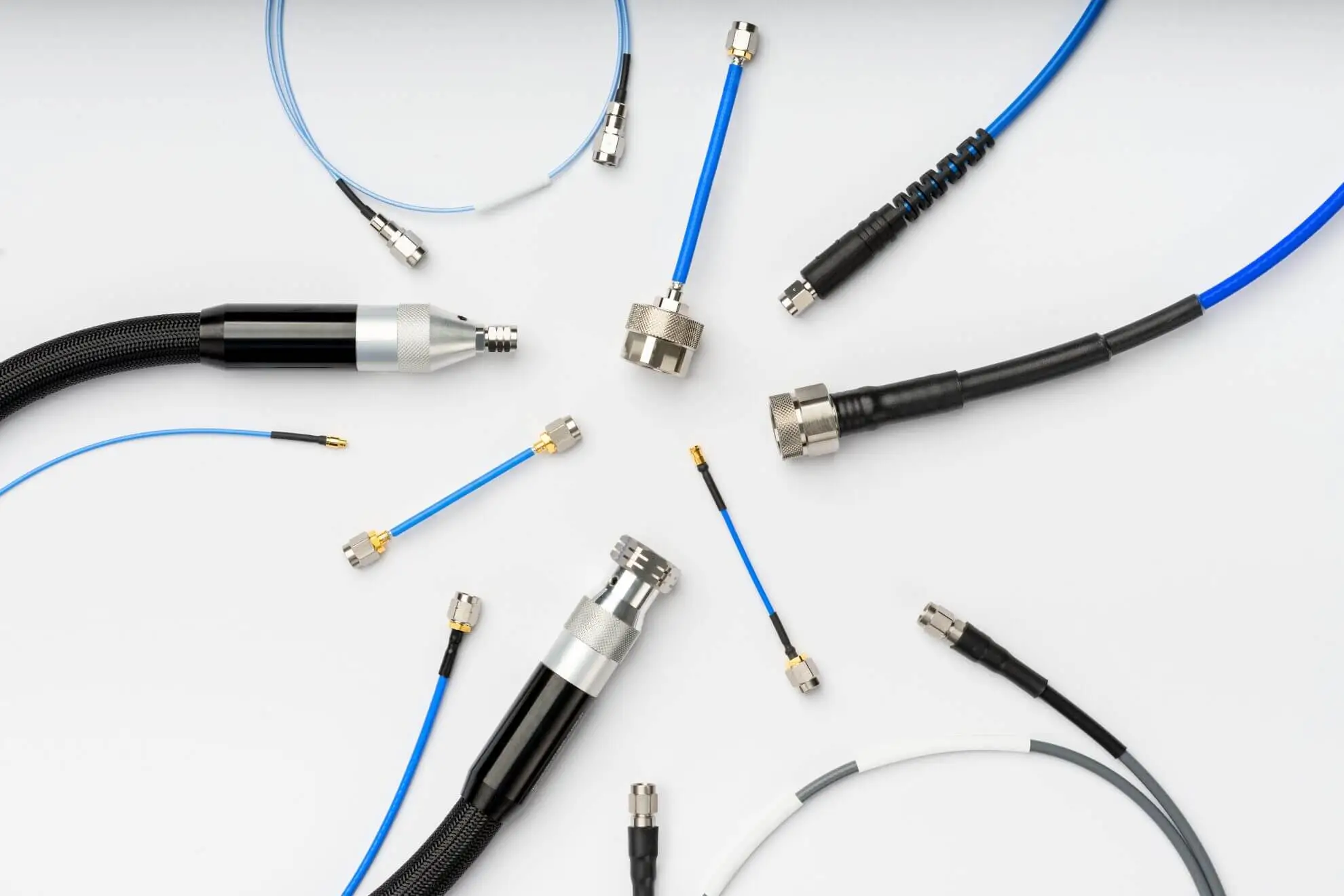
The portfolio includes system interconnect cables, precision test cables, phase-stable flexible cables, armored test cables, hand-formable cables, low-loss flexible cables and specialized non-magnetic cable assemblies, with selected models operating from DC to 110 GHz.
Available connector interfaces include SMA, N-Type, BNC, F-Type, MCX, MMCX, SMP, SMPM, 2.92 mm, 2.4 mm, 1.85 mm and selected 1.0 mm configurations, depending on cable family and operating frequency.
Solutions are available for both 50 Ω and selected 75 Ω systems, with multiple cable lengths, connector genders, straight and right-angle orientations, bulkhead configurations and quick-connect options.
MCDI’s Application Engineering team in Israel can assist you in selecting the appropriate Mini-Circuits cable according to frequency, insertion loss, cable length, phase stability, flexibility, shielding, connector type, impedance and environmental requirements.
Use the RF Cable Catalog below to search and compare Mini-Circuits cable assemblies according to your application requirements.
Search and filter by parameters such as:
Part number
Cable category
Cable type
Maximum frequency
Insertion loss
Cable length
Impedance
Connector 1 type
Connector 1 gender
Connector 1 orientation
Connector 1 mounting type
Connector 2 type
Connector 2 gender
Connector 2 orientation
Connector 2 mounting type
For complete frequency, insertion-loss, VSWR, power, environmental and mechanical specifications, always review the individual Mini-Circuits product datasheet.
Different RF applications place very different demands on the cable assembly. A cable intended for permanent system interconnection does not necessarily require the same mechanical and electrical performance as a cable used repeatedly on a VNA or RF test bench.
RF System Interconnect Cables
RF interconnect cables are used to connect RF components, modules, instruments and subsystems within equipment or complete RF signal chains.
Common applications include:
RF equipment interconnection
Communications systems
Rack-mounted systems
Test equipment
Aerospace and defense electronics
Radar systems
Laboratory equipment
Production systems
Important parameters include frequency range, insertion loss, impedance, connector type, cable length, shielding and mechanical routing.
Interconnect cables may be flexible or hand-formable depending on whether the installation needs to move during operation.
Precision RF Test Cables
Precision test cables are designed for laboratory and measurement environments where electrical repeatability is especially important.
Applications include:
Vector network analyzer measurements
Device characterization
RF production test
Calibration setups
Research and development
Semiconductor testing
Microwave and mmWave measurements
When selecting a test cable, consider not only insertion loss but also:
Phase stability
Amplitude stability
Return loss
Flexibility
Connector durability
Repeatability after bending
Mechanical robustness
Mini-Circuits offers precision test cable families with operating frequencies extending through 40, 50, 67 and, with selected models, 110 GHz.
Phase-Stable Flexible RF Cables
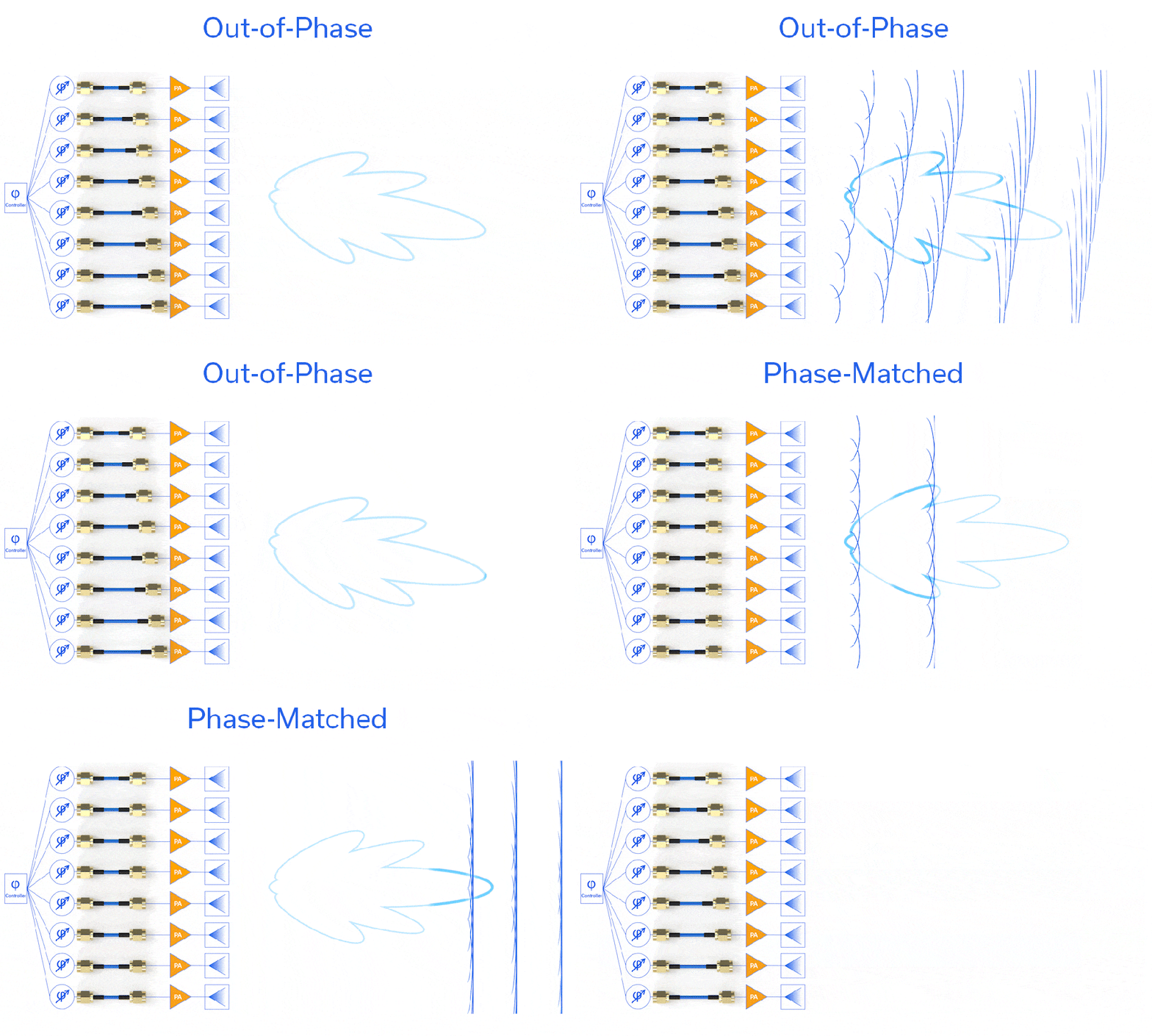
Cable bending can change electrical length, which in turn can cause phase and amplitude changes.
For measurement systems in which the cable is frequently repositioned, a phase-stable flexible cable can significantly improve measurement repeatability.
Mini-Circuits’ CBN-series phase-stable flex cables operate from DC to 26.5 GHz in selected SMA configurations and combine high flexibility with controlled phase and amplitude variation.
Typical applications include:
Precision RF measurements
VNA testing
Device characterization
Production test
Instrumentation
RF breadboarding
Research laboratories
Equipment rack interconnections
Armored RF Test Cables
Armored test cables provide increased mechanical protection for demanding laboratory, production and field environments.
They can be useful where a cable is repeatedly handled or where additional resistance to crushing, abrasion and mechanical damage is required.
Mini-Circuits offers armored precision-test cable solutions across microwave and millimeter-wave frequency ranges.
Selected 1.0 mm WBL-series armored cables operate from DC to 110 GHz, combining ultra-wide frequency coverage with rugged construction.
These cables are particularly relevant to:
mmWave test setups
Semiconductor characterization
Radar development
High-frequency instrumentation
Production test
Precision laboratory measurement
110 GHz RF Cable Assemblies
Mini-Circuits now offers 1.0 mm coaxial cable assemblies extending from DC to 110 GHz for demanding millimeter-wave measurement and interconnection applications.
Available families include flexible and armored configurations with 1.0 mm connector combinations.
Typical applications include:
Millimeter-wave test and measurement
Semiconductor probe testing
Optical communications
High-speed data systems
Automotive radar development
Military radar testing
Precision instrumentation
Research and development
Because 1.0 mm connectors require careful handling and proper torque, always follow the manufacturer’s connector-handling recommendations.
Hand-Flex and Conformable RF Cables
Hand-formable or conformable RF cable assemblies provide a useful compromise between semi-rigid construction and conventional flexible cable.
They can be shaped to follow a defined routing path and generally retain their form after installation.
Typical applications include:
Internal equipment interconnection
Compact RF assemblies
Prototype systems
Rack-mounted equipment
Fixed RF routing
Applications with limited installation space
Mini-Circuits offers multiple diameters and connector combinations, including straight, right-angle and bulkhead configurations.
Flexible RF Cable Assemblies
General-purpose flexible coaxial cables provide convenient interconnection where the cable needs to move or where routing requirements make rigid cable impractical.
Important considerations include:
Maximum operating frequency
Cable loss
Minimum bend radius
Connector type
Cable diameter
Shielding effectiveness
Expected movement or flexing
Flexible cable is commonly used for laboratory equipment, instrumentation, RF systems and system interconnections.
Non-Magnetic RF Cables
Some applications require cable assemblies constructed with reduced or eliminated magnetic materials.
Mini-Circuits offers selected non-magnetic flexible and hand-formable cable assemblies for specialized applications.
Potential applications include:
Medical systems
Magnetic-field-sensitive instrumentation
Research equipment
Aerospace systems
Specialized test environments
Always check the individual datasheet and material specifications when magnetic properties are critical.
75 Ω RF Cable Assemblies
While many RF and microwave applications use 50 Ω systems, Mini-Circuits also offers selected 75 Ω cable assemblies.
These may be suitable for applications including:
CATV
Broadband distribution
Video systems
Communications infrastructure
Always match the cable impedance to the complete RF system.
How to Select an RF Coaxial Cable Assembly
Selecting the right RF cable requires balancing electrical performance with mechanical requirements.
Maximum Operating Frequency
The cable assembly must support the entire frequency range of the application.
Do not select a cable based only on connector compatibility. The cable construction and complete assembled product must also be specified for the required frequency.
For higher-frequency applications, precision connector families such as:
2.92 mm
2.4 mm
1.85 mm
1.0 mm
may be required.
Insertion Loss
Every cable introduces signal loss.
Insertion loss generally increases with:
Frequency
Cable length
Smaller cable diameter
For low-level receiver systems, high-frequency measurements or longer cable runs, insertion loss may become one of the most important selection parameters.
Compare insertion loss at the actual operating frequency rather than relying only on a broadband maximum value.
Return Loss and VSWR
Impedance mismatches at the connectors and throughout the cable can create reflections.
Good return loss or low VSWR helps maintain predictable signal transmission and is particularly important in:
Precision measurements
VNA applications
mmWave systems
Wideband test systems
Cable Length
Longer cables generally introduce greater insertion loss and electrical delay.
Choose the shortest practical cable while still allowing sufficient routing and movement for the application.
Mini-Circuits offers standard cable lengths in both imperial and metric formats, with custom assemblies available for selected families.
Phase Stability
In precision test applications, bending or repositioning a cable can change its electrical length and therefore its phase.
If the cable will be moved after calibration, consider a cable specifically characterized for phase stability versus flexure.
This can improve measurement repeatability and reduce the need for repeated calibration.
Amplitude Stability
Mechanical movement can also change cable insertion loss.
For precision test environments, consider both phase and amplitude stability when selecting a frequently flexed cable.
Connector Type
The connector must be compatible with both the equipment and required frequency.
Available Mini-Circuits cable assemblies include connector families such as:
SMA
N-Type
BNC
F-Type
MCX
MMCX
SMP
SMPM
2.92 mm
2.4 mm
1.85 mm
1.0 mm
Connector frequency capability should always be considered together with the complete cable assembly specification.
Connector Gender
Cable assemblies are available with male and female connector combinations depending on product family.
Selecting the correct gender can eliminate unnecessary adapters, helping reduce:
Additional insertion loss
Additional reflections
Mechanical complexity
Extra connection points
Straight, Right-Angle and Bulkhead Connectors
Mechanical routing can influence connector choice.
Options may include:
Straight connectors
Right-angle connectors
Bulkhead connectors
Quick-connect configurations
A right-angle connector can simplify installation where space is restricted, while bulkhead configurations are useful when the cable passes through a panel or enclosure.
Flexibility and Bend Radius
Every cable has mechanical bending limits.
Repeatedly bending a cable below its specified minimum bend radius can damage the cable or affect its electrical performance.
Consider:
Minimum bend radius
Frequency of movement
Required routing
Installation space
Flex life
when choosing between flexible, phase-stable, conformable and armored constructions.
Shielding
Cable shielding helps prevent RF leakage into or out of the transmission line.
High shielding effectiveness may be particularly important in:
Sensitive receiver systems
Dense RF test environments
EMC-sensitive systems
High-dynamic-range measurements
Mechanical Durability
A cable used once inside a fixed assembly has different mechanical requirements from a cable connected and disconnected hundreds of times on a laboratory bench.
For heavy test use, consider:
Connector mating-cycle durability
Cable armor
Strain relief
Flex life
Connector protection
Impedance
Use a cable matching the system impedance.
Most RF and microwave systems use 50 Ω, while some broadcast, CATV and broadband systems use 75 Ω.
Mixing impedances can introduce mismatch and reflections.
RF Cable Applications
Mini-Circuits RF coaxial cable assemblies support a wide range of RF, microwave and millimeter-wave applications.
RF Test & Measurement
Precision cable assemblies connect instruments, calibration equipment and devices under test while helping maintain repeatable measurement performance.
Vector Network Analyzer Measurements
High-quality precision test cables are especially important in VNA measurements because cable movement after calibration can contribute measurement uncertainty.
Automated Production Test
Reliable and mechanically durable cable assemblies are used in automated RF test stations and production environments.
Radar
High-frequency cable assemblies support radar development, testing and system interconnection from conventional microwave frequencies through millimeter-wave bands.
5G and Advanced Wireless
Wideband and mmWave cable assemblies support advanced wireless development, RF characterization and laboratory test setups.
Satellite Communications
RF and microwave cables provide interconnection between SATCOM components, test equipment and complete signal chains.
Semiconductor Testing
High-frequency and millimeter-wave cable assemblies are used in semiconductor characterization, wafer probing and component test systems.
Optical Communications
Ultra-wideband 110 GHz cable assemblies can support test and measurement requirements associated with high-speed optical and data communication systems.
Aerospace & Defense
Rugged, armored, phase-stable and specialized RF cables can support demanding aerospace, radar, communications and defense applications.
Research & Development
Flexible and precision cable assemblies make it easier to reconfigure laboratory setups while maintaining predictable RF performance.
Phase-Stable RF Cables for Precision Measurements
Cable movement after calibration is a common source of uncertainty in RF measurements.
MCDI offers Mini-Circuits phase-stable cable assemblies designed to minimize changes in phase and amplitude as the cable is flexed.
Mini-Circuits’ CBN-series, for example, provides exceptional phase and amplitude stability in a highly flexible construction for applications through 26.5 GHz.
Custom RF Cable Assemblies
Standard cable assemblies cover many common RF requirements, but some systems require a specific combination of:
MCDI’s Application Engineers can help define the required configuration and determine whether an existing catalog model or custom cable assembly is the best solution.
What is an RF coaxial cable?
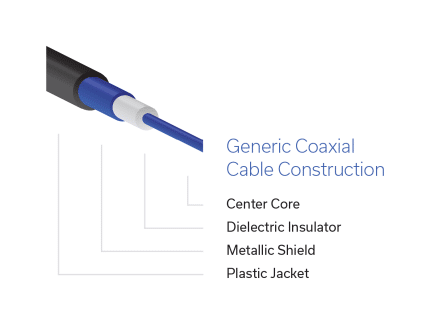
An RF coaxial cable is a transmission line designed to carry radio-frequency signals while maintaining a controlled characteristic impedance.
It normally consists of a center conductor, dielectric material, outer shield and protective jacket.
What is the difference between an RF interconnect cable and a test cable?
An interconnect cable is generally intended to connect components or equipment in a system.
A precision test cable is designed with additional emphasis on measurement performance, including parameters such as phase stability, amplitude stability, return loss and mechanical repeatability.
What frequency do Mini-Circuits RF cables support?
Mini-Circuits offers cable assemblies covering a broad range of frequencies.
Selected current 1.0 mm flexible and armored cable assemblies operate from DC to 110 GHz, while many other product families are optimized for frequencies such as 18, 26.5, 40, 50 or 67 GHz.
Always verify the operating frequency of the individual cable assembly.
What connector should I use for a high-frequency RF cable?
The appropriate connector depends on the required frequency and equipment interface.
Common precision high-frequency interfaces include 2.92 mm, 2.4 mm, 1.85 mm and 1.0 mm.
Always select the connector and cable assembly according to their specified frequency capability.
What is insertion loss in an RF cable?
Insertion loss is the amount of RF signal power lost as the signal travels through the cable assembly.
It is expressed in dB and generally increases with cable length and frequency.
Why is phase stability important in an RF test cable?
When a cable bends, its electrical length can change.
This may cause a phase shift and introduce measurement error after a test system has been calibrated.
Phase-stable cables are designed and characterized to minimize these changes during flexure.
What is amplitude stability?
Amplitude stability describes how little the cable’s insertion loss changes as the cable is moved or flexed.
It is particularly important in precision measurement applications.
Does a longer RF cable have more insertion loss?
Generally, yes.
For the same cable construction and operating frequency, a longer cable normally has greater insertion loss than a shorter cable.
What is the difference between flexible and hand-formable RF cable?
A flexible cable is designed to bend and move repeatedly within its specified mechanical limits.
A hand-formable or conformable cable can be shaped into a routing path and tends to retain that shape, making it useful for fixed internal interconnections.
What is an armored RF cable?
An armored cable incorporates additional mechanical protection to help resist crushing, abrasion and damage during repeated use.
Armored cables are particularly useful in demanding test and field environments.
Does Mini-Circuits offer 110 GHz RF cables?
Yes. Mini-Circuits currently offers selected 1.0 mm cable assemblies operating from DC to 110 GHz, including flexible AP110-series and armored WBL-series models.
Does Mini-Circuits offer phase-stable RF cables?
Yes. Mini-Circuits offers multiple test cable families designed for enhanced phase stability. The CBN phase-stable flexible series, for example, operates through 26.5 GHz in selected configurations.
Can MCDI provide custom RF cable assemblies?
Mini-Circuits supports selected custom cable configurations, including different lengths, connector arrangements and phase-matched requirements.
MCDI can help determine whether a standard or custom configuration is appropriate.
Can MCDI help select an RF cable?
Yes. MCDI’s Application Engineering team in Israel can help identify appropriate Mini-Circuits cable assemblies based on frequency, loss, length, connector, impedance, phase stability, flexibility and mechanical requirements.
Why Source Mini-Circuits RF CablesThrough MCDI?
MCDI is Mini-Circuits’ exclusive representative and distributor in Israel, providing Israeli engineers and purchasing teams with access to Mini-Circuits RF, microwave and millimeter-wave products together with local technical, commercial and logistical support.
Local Application Engineering
Cable selection often requires balancing frequency, loss, phase stability, flexibility, connector configuration, shielding and mechanical requirements.
MCDI’s Application Engineers can help identify suitable Mini-Circuits cable assemblies.
Technical Support in Hebrew and English
Discuss your RF requirements directly with a local engineering team familiar with Mini-Circuits cable and interconnect products.
Custom Cable Assistance
If a standard configuration does not meet your requirements, MCDI can assist with defining custom lengths, connector combinations and other available custom options.
Local Purchasing and Logistics
MCDI supports customers in Israel from product selection and quotation through ordering, logistics and post-sales support.
Before you leave, you should know that MCDI’s professional team of Application Engineers will be delighted to assist you in sourcing the right component. Just fill the form and we will be back to you shortly.